 Image 1 of 1
As an aesthetician, I have sat across from more women than I can count who told me the same thing.
"I've tried vitamin C. It burned. It broke me out. It turned orange in the bottle. I gave up."
And every time, I thought the same thing: we are selling this ingredient completely wrong.
Vitamin C is not a brightener.It is not an antioxidant serum you layer on top of your moisturizer and hope for the best.
It is the essential cofactor to collagen production — one of the most validated, most studied relationships in all of skin science. Without adequate vitamin C, the fibroblasts in your dermis cannot synthesize collagen. It is not optional. It is biological.
And yet we stopped short. We marketed it as a glow serum. We put it in water-based formulas that oxidize within weeks, that sit on top of the skin because water cannot penetrate the lipid barrier, that sting and inflame the very skin that needs rebuilding most.
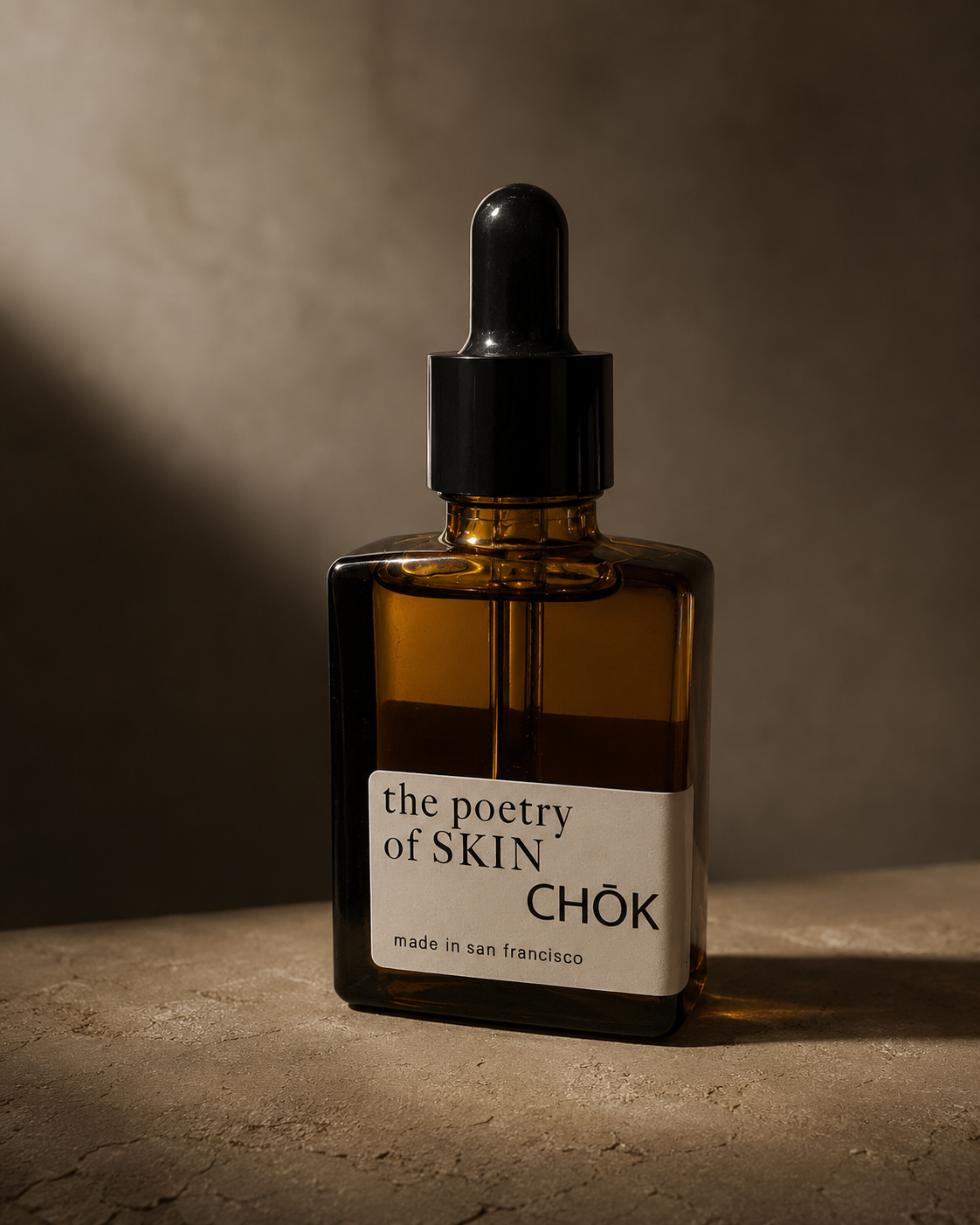
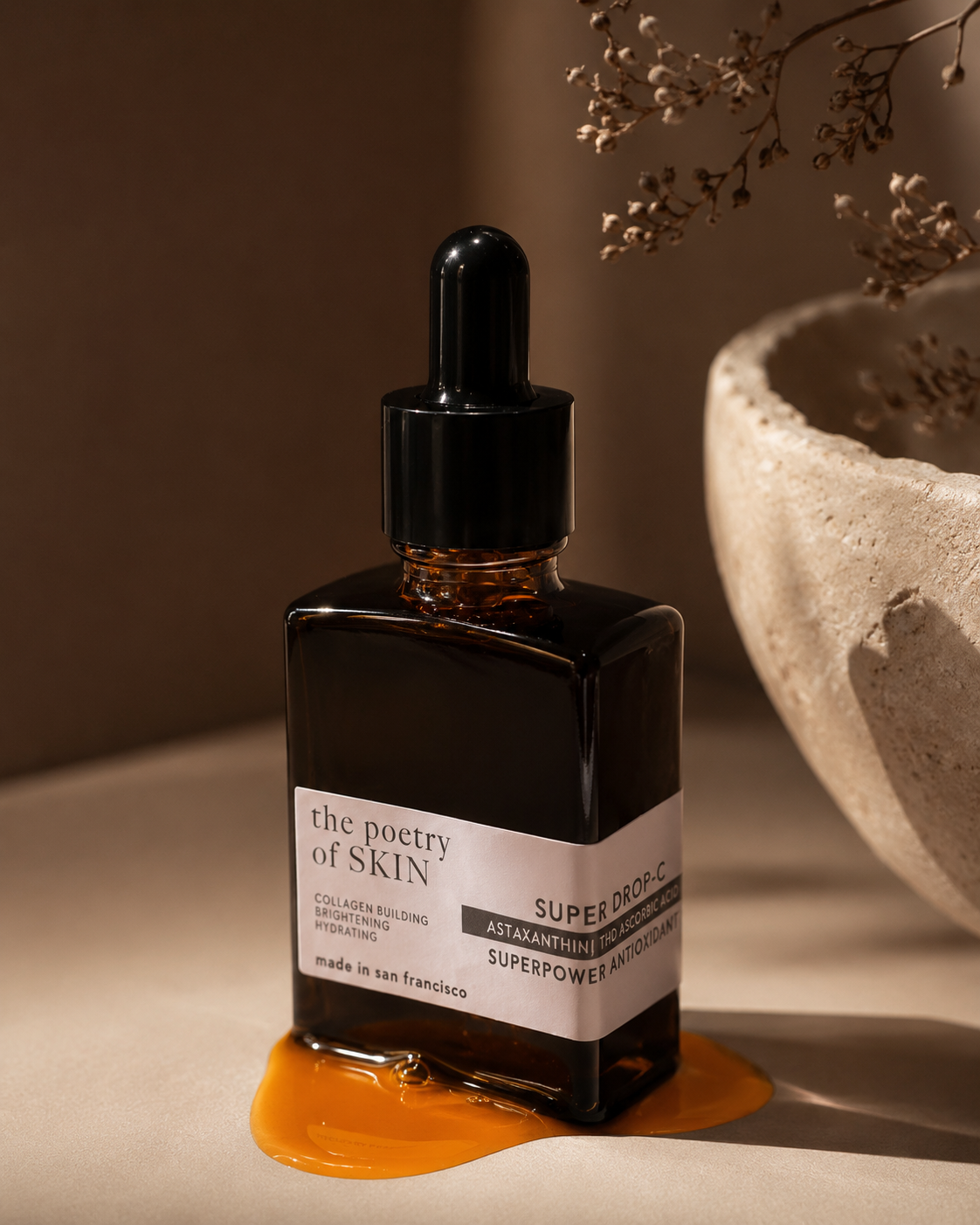
I formulated Super Drop C because I was tired of that story.
THD Ascorbate — tetrahexyldecyl ascorbate — is oil-soluble. That matters more than almost anything else I can tell you about this formula. Because the skin's barrier is lipid-based. Oil speaks its language. Water-soluble vitamin C knocks on a door that was never going to open. THD Ascorbate walks through.
It reaches the dermis. It reaches the fibroblasts. It does the one job vitamin C was always meant to do — support the collagen your skin is trying to make every single day.
At 60% concentration, this is not a trace ingredient dressed up in marketing language. It is the formula.
And then there is Astaxanthin.
If you have never heard of it, you are not alone. It does not have a celebrity endorsement or a pastel label. What it has is science. A marine carotenoid derived from microalgae, Astaxanthin is 6,000 times more powerful than vitamin C as an antioxidant. It is what gives wild salmon their endurance and flamingos their color. In your skin, it neutralizes free radical damage at a cellular level that most actives never reach.
Together — THD Ascorbate and Astaxanthin — they do something I have never seen another formula do.
They transform without traumatizing.
For my clients with rosacea, eczema, acne, and chronically reactive skin — this is the formula I reach for first. Not because it is gentle in spite of being powerful. But because it is gentle because it understands the skin deeply enough not to fight it.
This is vitamin C as it was always meant to be used.As a cofactor. As a builder. As a restorer.
Not a brightener. A foundation.
— Grace, Botanical Atelier
As an aesthetician, I have sat across from more women than I can count who told me the same thing.
"I've tried vitamin C. It burned. It broke me out. It turned orange in the bottle. I gave up."
And every time, I thought the same thing: we are selling this ingredient completely wrong.
Vitamin C is not a brightener.It is not an antioxidant serum you layer on top of your moisturizer and hope for the best.
It is the essential cofactor to collagen production — one of the most validated, most studied relationships in all of skin science. Without adequate vitamin C, the fibroblasts in your dermis cannot synthesize collagen. It is not optional. It is biological.
And yet we stopped short. We marketed it as a glow serum. We put it in water-based formulas that oxidize within weeks, that sit on top of the skin because water cannot penetrate the lipid barrier, that sting and inflame the very skin that needs rebuilding most.
I formulated Super Drop C because I was tired of that story.
THD Ascorbate — tetrahexyldecyl ascorbate — is oil-soluble. That matters more than almost anything else I can tell you about this formula. Because the skin's barrier is lipid-based. Oil speaks its language. Water-soluble vitamin C knocks on a door that was never going to open. THD Ascorbate walks through.
It reaches the dermis. It reaches the fibroblasts. It does the one job vitamin C was always meant to do — support the collagen your skin is trying to make every single day.
At 60% concentration, this is not a trace ingredient dressed up in marketing language. It is the formula.
And then there is Astaxanthin.
If you have never heard of it, you are not alone. It does not have a celebrity endorsement or a pastel label. What it has is science. A marine carotenoid derived from microalgae, Astaxanthin is 6,000 times more powerful than vitamin C as an antioxidant. It is what gives wild salmon their endurance and flamingos their color. In your skin, it neutralizes free radical damage at a cellular level that most actives never reach.
Together — THD Ascorbate and Astaxanthin — they do something I have never seen another formula do.
They transform without traumatizing.
For my clients with rosacea, eczema, acne, and chronically reactive skin — this is the formula I reach for first. Not because it is gentle in spite of being powerful. But because it is gentle because it understands the skin deeply enough not to fight it.
This is vitamin C as it was always meant to be used.As a cofactor. As a builder. As a restorer.
Not a brightener. A foundation.
— Grace, Botanical Atelier