
 Image 1 of 1
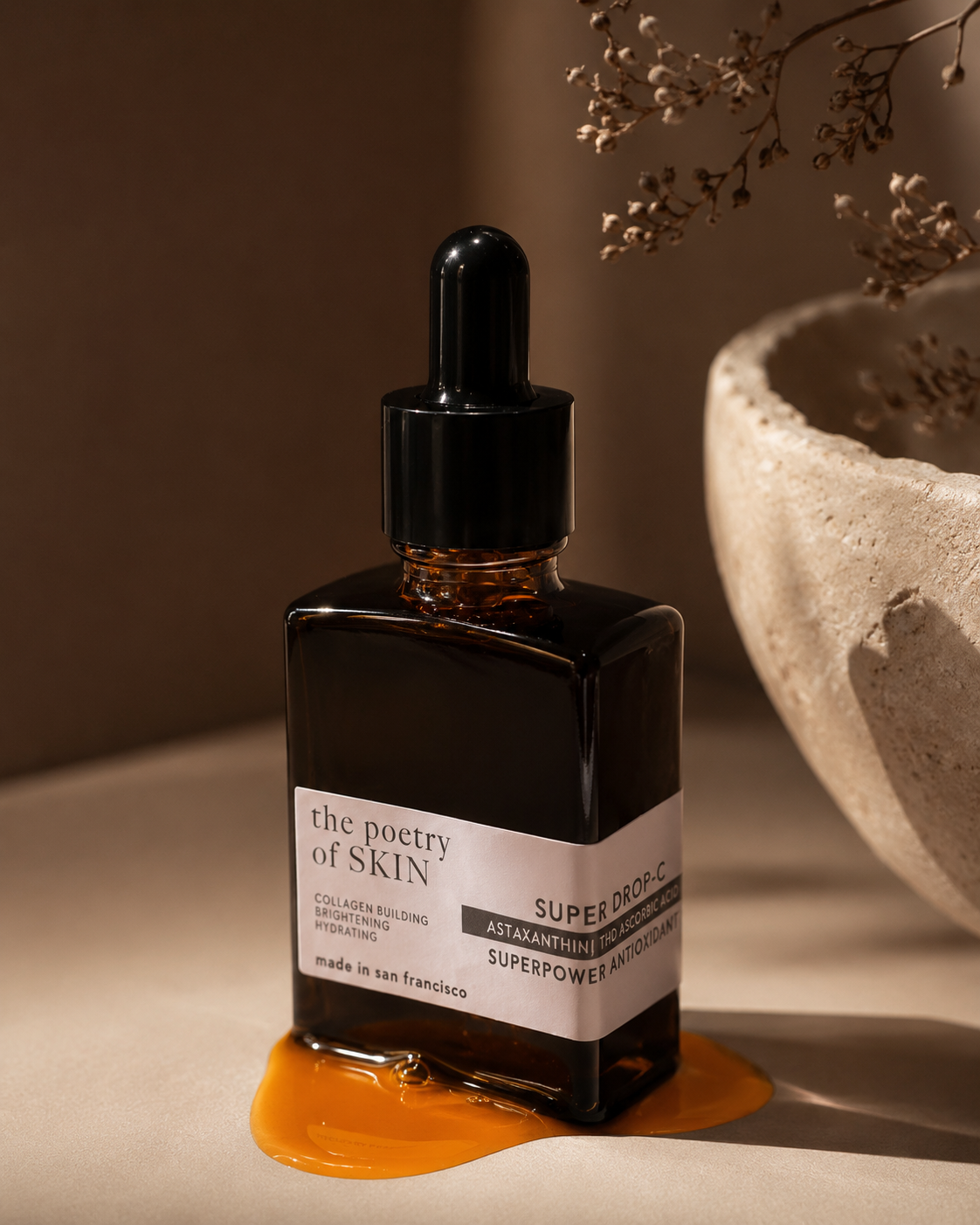
Super Drop C
Super Drop C — Vitamin C Serum for Sensitive Skin
Vitamin C for skin after 40 — why most formulas fail it
I have sat across from more clients than I can count who said the same thing to me.
"I tried vitamin C. It burned. It broke me out. The bottle turned yellow/brown in three weeks. I gave up."
And every time, I thought the same thing: we are selling this ingredient completely wrong — especially for skin that's changed with age.
Every brand will tell you vitamin C is an antioxidant. And it is — but most formulas stop there, and stopping there is exactly why so many vitamin C products on the market never get a fair chance to work on skin after 40.
Vitamin C has long been studied for its role in skin's resilience and visible firmness over time. But most of that potential is wasted before it ever gets a chance to matter — because most vitamin C is water-soluble, and skin's barrier is lipid-based. The two were never going to get along.
We reduced vitamin C to a brightener. We put it in water-based formulas that oxidize within weeks, sit on top of the skin instead of working with it, and sting and inflame the very people who could benefit most — women with rosacea, eczema, and chronically reactive skin who were told they simply couldn't use actives.
I formulated Super Drop C because I was done with that story.
What Super Drop C does for reactive, midlife skin
Super Drop C is formulated to move past the surface and work with skin's own structure — without the inflammation, oxidation, or irritation that's defined most people's experience of vitamin C.
With consistent use, skin looks visibly firmer, tone appears more even, and post-inflammatory marks fade over time. It's not about resurfacing anything. It's about giving skin what it needs to look like it's working with you, not against it.
It absorbs without residue. It doesn't sting. The formula is built to resist oxidation in the bottle far longer than standard vitamin C — and it's formulated to work on skin that other vitamin C formulas have already failed.
The Korean priori science behind a vitamin C built for sensitive skin
THD Ascorbate — tetrahexyldecyl ascorbate — is the reason this formula does what water-soluble vitamin C struggles to.
Skin's barrier is lipid-based. Standard L-ascorbic acid is water-soluble. It tends to sit at the surface, oxidize quickly, and cause the stinging and breakouts that made you give up on vitamin C in the first place.
THD Ascorbate is oil-soluble. Developed through Korean ingredient science and its exacting approach to formulation, it's designed to move with skin's own lipid structure rather than fight it — converting to active ascorbic acid once it reaches its target. Minimal oxidation in transit. Minimal irritation at the surface.
This is the Korean priori approach: not chasing trends, not reformulating a compromised ingredient to fit a water-based texture. Choosing the form of the ingredient that skin's own biology is more likely to accept.
60% THD Ascorbate and Astaxanthin — built for skin that stopped tolerating actives
At 60% concentration, THD Ascorbate is not a supporting ingredient in this formula. It is the formula.
Most vitamin C products on the market — even those positioned as high-performance — use concentrations well below what we believe is needed to make a visible difference. We didn't dilute it. We didn't dress a trace amount in marketing language. The concentration is the point.
And then there is Astaxanthin.
Most brands pair vitamin C with other antioxidants to amplify its antioxidant effect. We did the opposite — and it changes what this formula is capable of.
Astaxanthin is a marine carotenoid derived from microalgae, studied as one of the most potent antioxidants found in nature. It's what gives wild salmon their cellular endurance. In skin, it's formulated here to take on the antioxidant workload at the surface.
When Astaxanthin carries that load, THD Ascorbate is freed up to focus on what it does best: working with skin's own structure, over time, without a fight.
That's the division of labor that makes this formula different. Not two antioxidants stacked on top of each other. One doing what it does best — so vitamin C can finally do what it was always meant to do.
For my clients with rosacea, eczema, acne, and chronically reactive skin — this is the formula I reach for first. Not because it's gentle in spite of being effective. But because it's gentle because it understands skin deeply enough not to fight it.
Visible results, without the trade-off. That's the standard this formula was built to meet.
How to use Super Drop C
Apply 3 to 4 drops to clean, dry skin each morning before moisturizer and SPF. Press gently into face and neck — do not rub.
If you are new to vitamin C or have reactive skin, begin on alternating days and increase to daily use as your skin adjusts.
Do not layer with direct acids or retinol in the same routine step. Super Drop C works best as the first active applied to bare skin, followed by a barrier-supporting moisturizer and broad-spectrum SPF 30 or higher.
Store away from direct sunlight. THD Ascorbate is formulated for greater stability than water-soluble vitamin C — but cool, dark storage extends the life of every active in the bottle.
— Grace, Botanical Atelier
Super Drop C — Vitamin C Serum for Sensitive Skin
Vitamin C for skin after 40 — why most formulas fail it
I have sat across from more clients than I can count who said the same thing to me.
"I tried vitamin C. It burned. It broke me out. The bottle turned yellow/brown in three weeks. I gave up."
And every time, I thought the same thing: we are selling this ingredient completely wrong — especially for skin that's changed with age.
Every brand will tell you vitamin C is an antioxidant. And it is — but most formulas stop there, and stopping there is exactly why so many vitamin C products on the market never get a fair chance to work on skin after 40.
Vitamin C has long been studied for its role in skin's resilience and visible firmness over time. But most of that potential is wasted before it ever gets a chance to matter — because most vitamin C is water-soluble, and skin's barrier is lipid-based. The two were never going to get along.
We reduced vitamin C to a brightener. We put it in water-based formulas that oxidize within weeks, sit on top of the skin instead of working with it, and sting and inflame the very people who could benefit most — women with rosacea, eczema, and chronically reactive skin who were told they simply couldn't use actives.
I formulated Super Drop C because I was done with that story.
What Super Drop C does for reactive, midlife skin
Super Drop C is formulated to move past the surface and work with skin's own structure — without the inflammation, oxidation, or irritation that's defined most people's experience of vitamin C.
With consistent use, skin looks visibly firmer, tone appears more even, and post-inflammatory marks fade over time. It's not about resurfacing anything. It's about giving skin what it needs to look like it's working with you, not against it.
It absorbs without residue. It doesn't sting. The formula is built to resist oxidation in the bottle far longer than standard vitamin C — and it's formulated to work on skin that other vitamin C formulas have already failed.
The Korean priori science behind a vitamin C built for sensitive skin
THD Ascorbate — tetrahexyldecyl ascorbate — is the reason this formula does what water-soluble vitamin C struggles to.
Skin's barrier is lipid-based. Standard L-ascorbic acid is water-soluble. It tends to sit at the surface, oxidize quickly, and cause the stinging and breakouts that made you give up on vitamin C in the first place.
THD Ascorbate is oil-soluble. Developed through Korean ingredient science and its exacting approach to formulation, it's designed to move with skin's own lipid structure rather than fight it — converting to active ascorbic acid once it reaches its target. Minimal oxidation in transit. Minimal irritation at the surface.
This is the Korean priori approach: not chasing trends, not reformulating a compromised ingredient to fit a water-based texture. Choosing the form of the ingredient that skin's own biology is more likely to accept.
60% THD Ascorbate and Astaxanthin — built for skin that stopped tolerating actives
At 60% concentration, THD Ascorbate is not a supporting ingredient in this formula. It is the formula.
Most vitamin C products on the market — even those positioned as high-performance — use concentrations well below what we believe is needed to make a visible difference. We didn't dilute it. We didn't dress a trace amount in marketing language. The concentration is the point.
And then there is Astaxanthin.
Most brands pair vitamin C with other antioxidants to amplify its antioxidant effect. We did the opposite — and it changes what this formula is capable of.
Astaxanthin is a marine carotenoid derived from microalgae, studied as one of the most potent antioxidants found in nature. It's what gives wild salmon their cellular endurance. In skin, it's formulated here to take on the antioxidant workload at the surface.
When Astaxanthin carries that load, THD Ascorbate is freed up to focus on what it does best: working with skin's own structure, over time, without a fight.
That's the division of labor that makes this formula different. Not two antioxidants stacked on top of each other. One doing what it does best — so vitamin C can finally do what it was always meant to do.
For my clients with rosacea, eczema, acne, and chronically reactive skin — this is the formula I reach for first. Not because it's gentle in spite of being effective. But because it's gentle because it understands skin deeply enough not to fight it.
Visible results, without the trade-off. That's the standard this formula was built to meet.
How to use Super Drop C
Apply 3 to 4 drops to clean, dry skin each morning before moisturizer and SPF. Press gently into face and neck — do not rub.
If you are new to vitamin C or have reactive skin, begin on alternating days and increase to daily use as your skin adjusts.
Do not layer with direct acids or retinol in the same routine step. Super Drop C works best as the first active applied to bare skin, followed by a barrier-supporting moisturizer and broad-spectrum SPF 30 or higher.
Store away from direct sunlight. THD Ascorbate is formulated for greater stability than water-soluble vitamin C — but cool, dark storage extends the life of every active in the bottle.
— Grace, Botanical Atelier