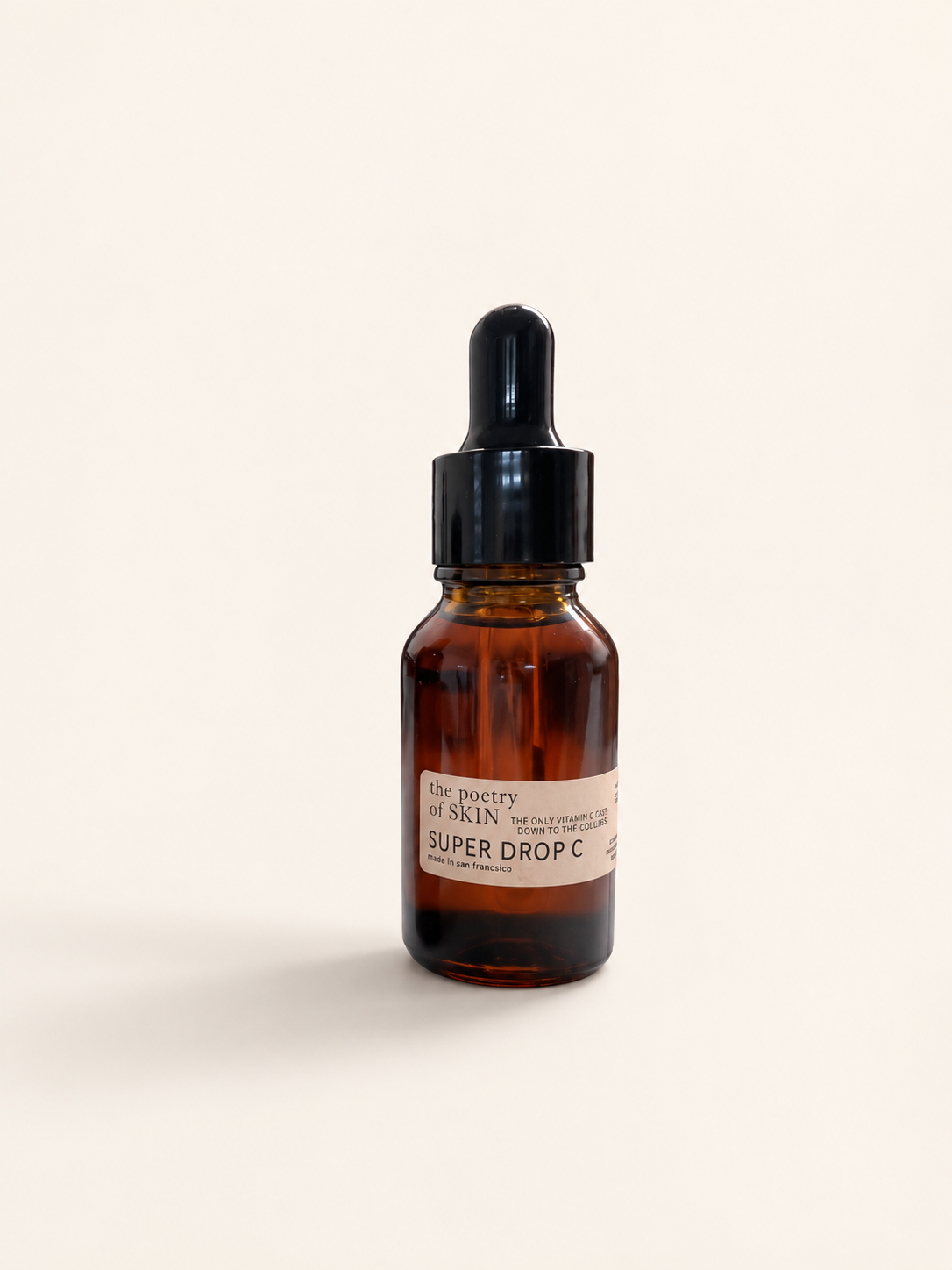
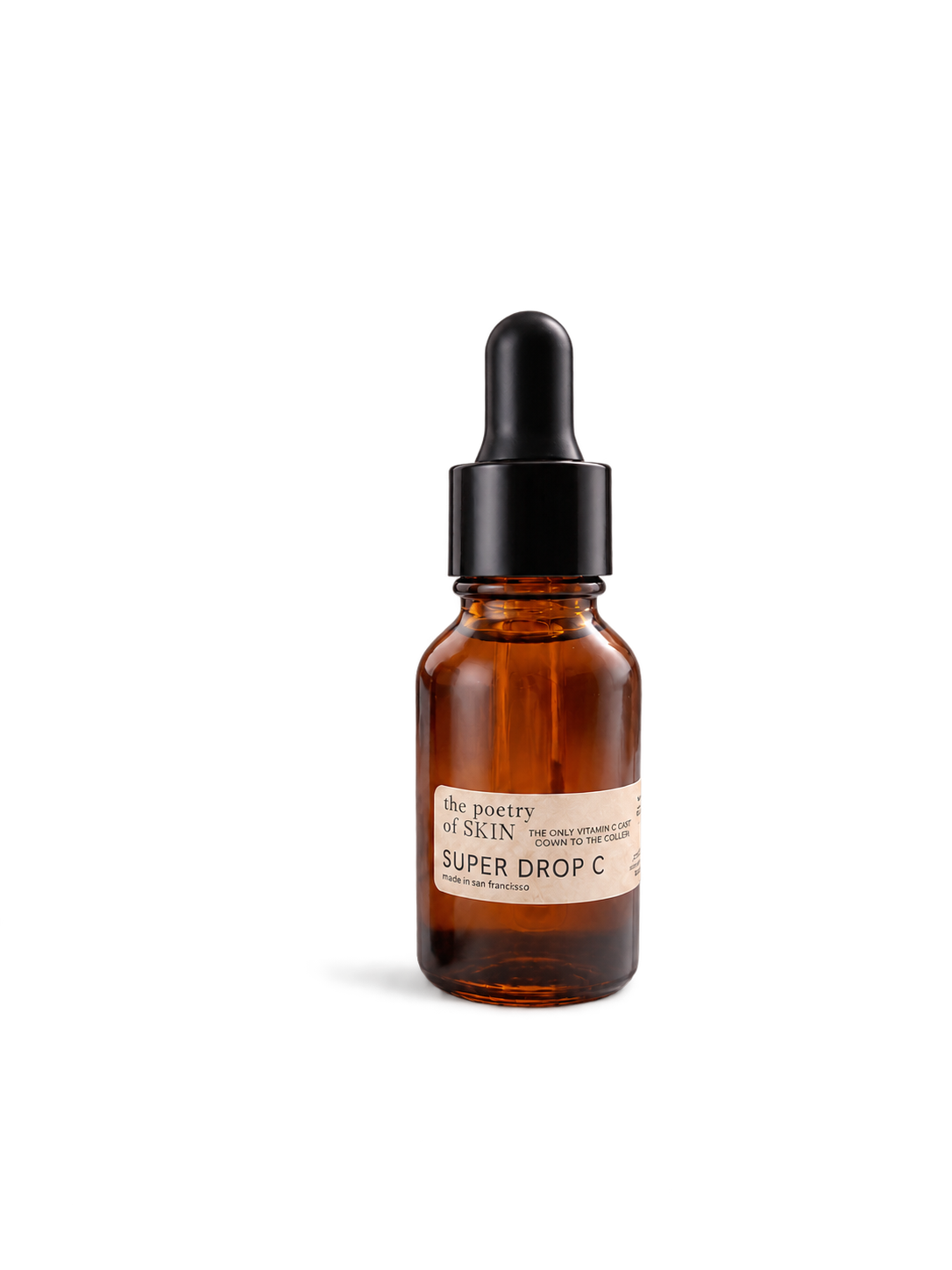
$10 FLAT-RATE U.S. SHIPPING/$35 INTERNATIONAL
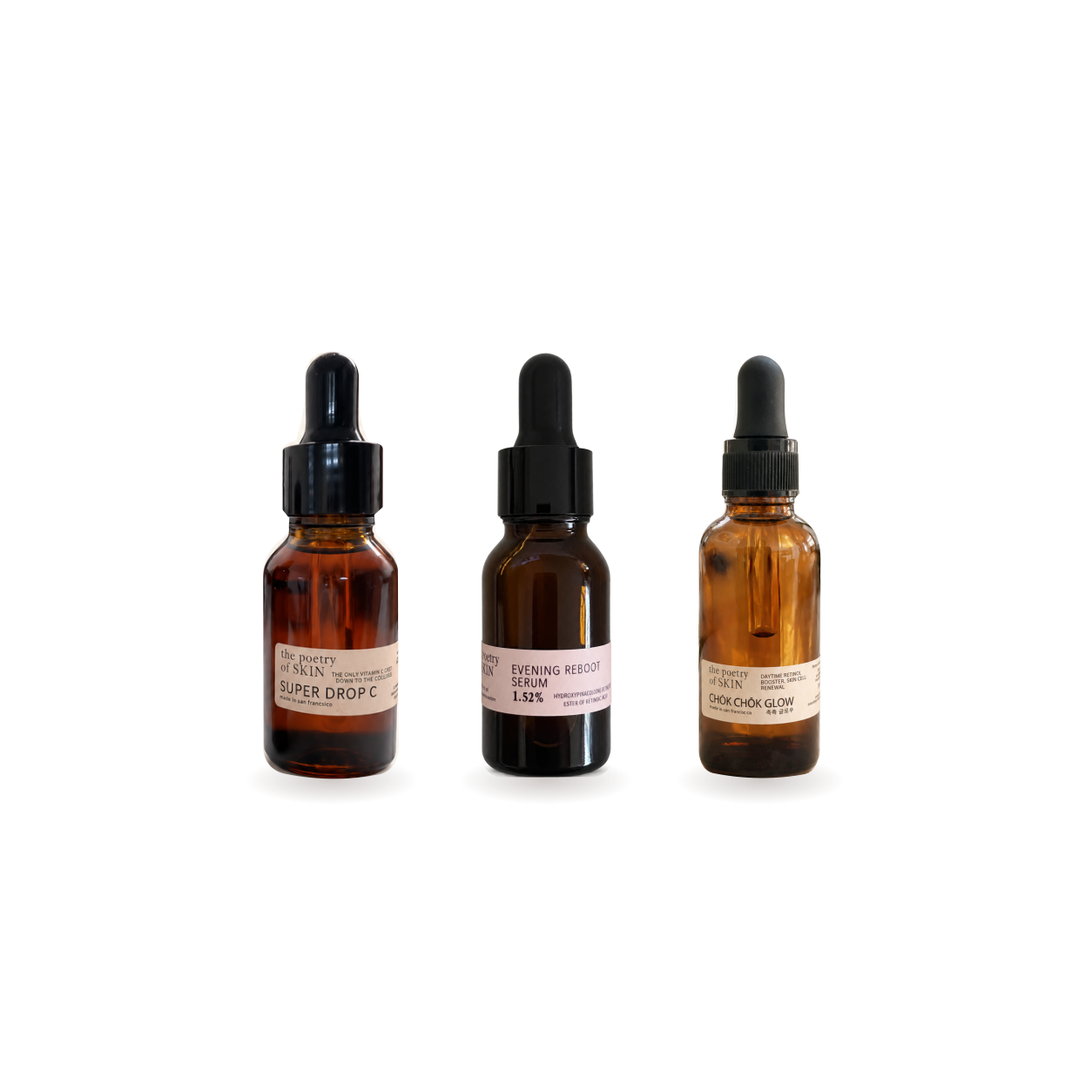
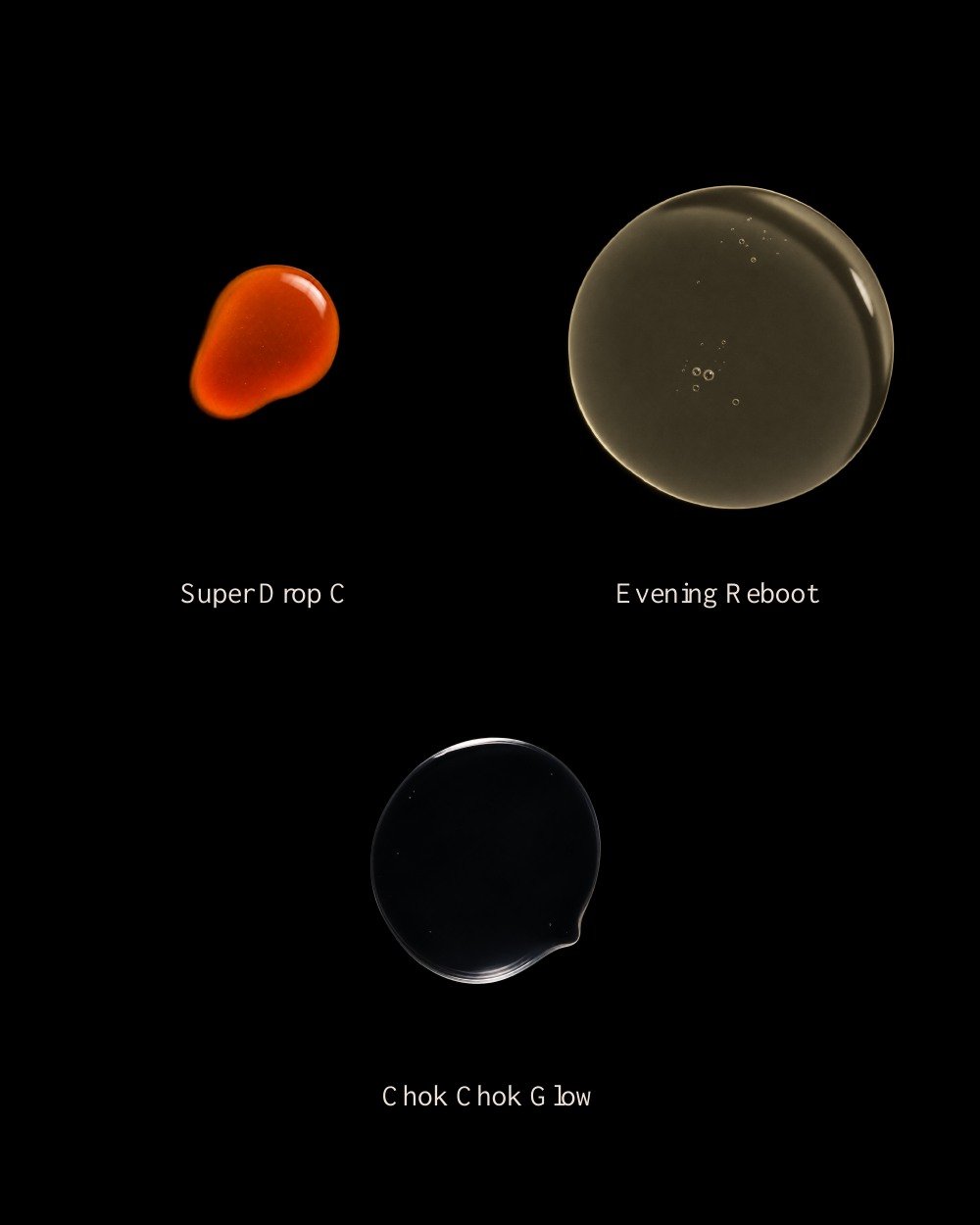
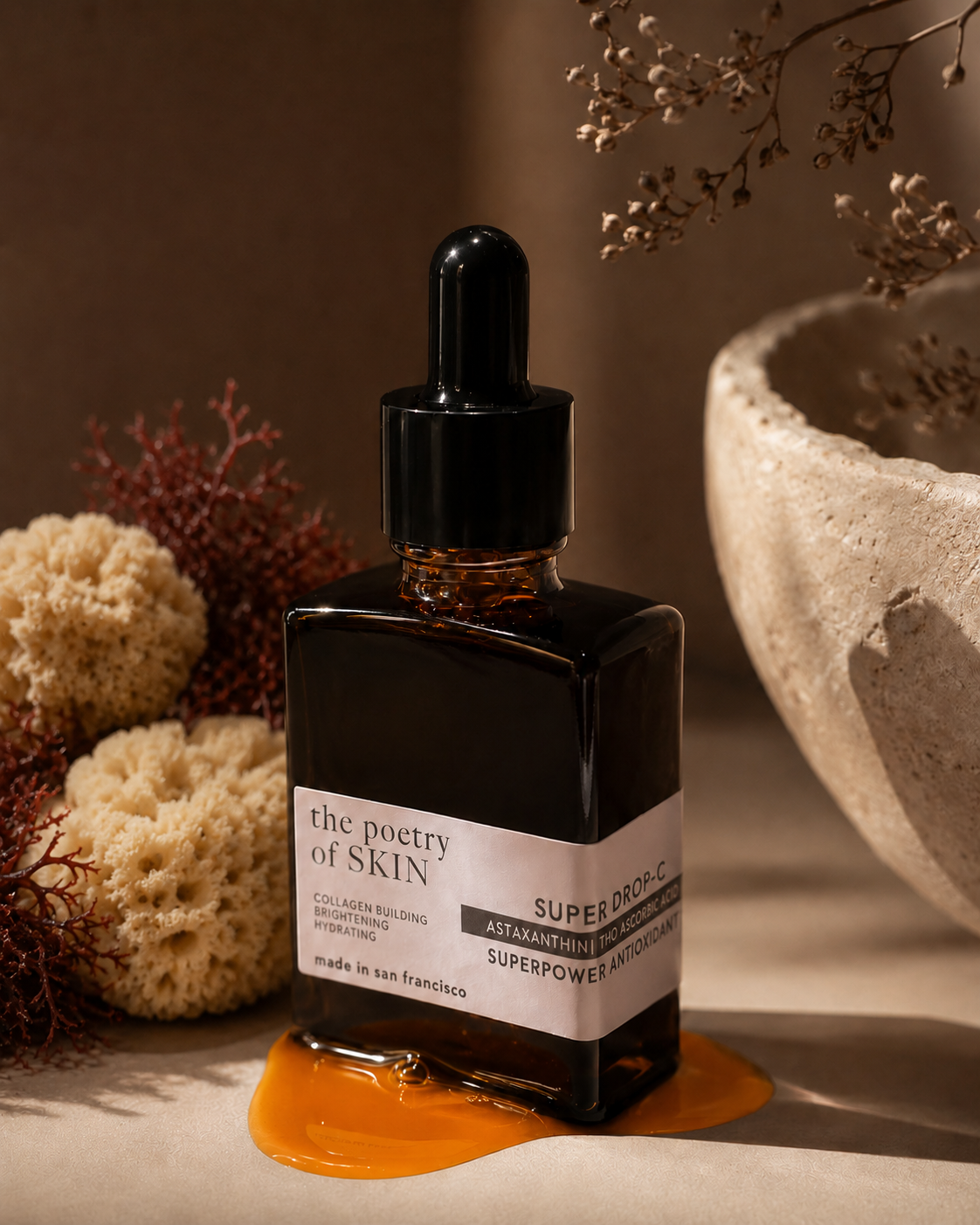
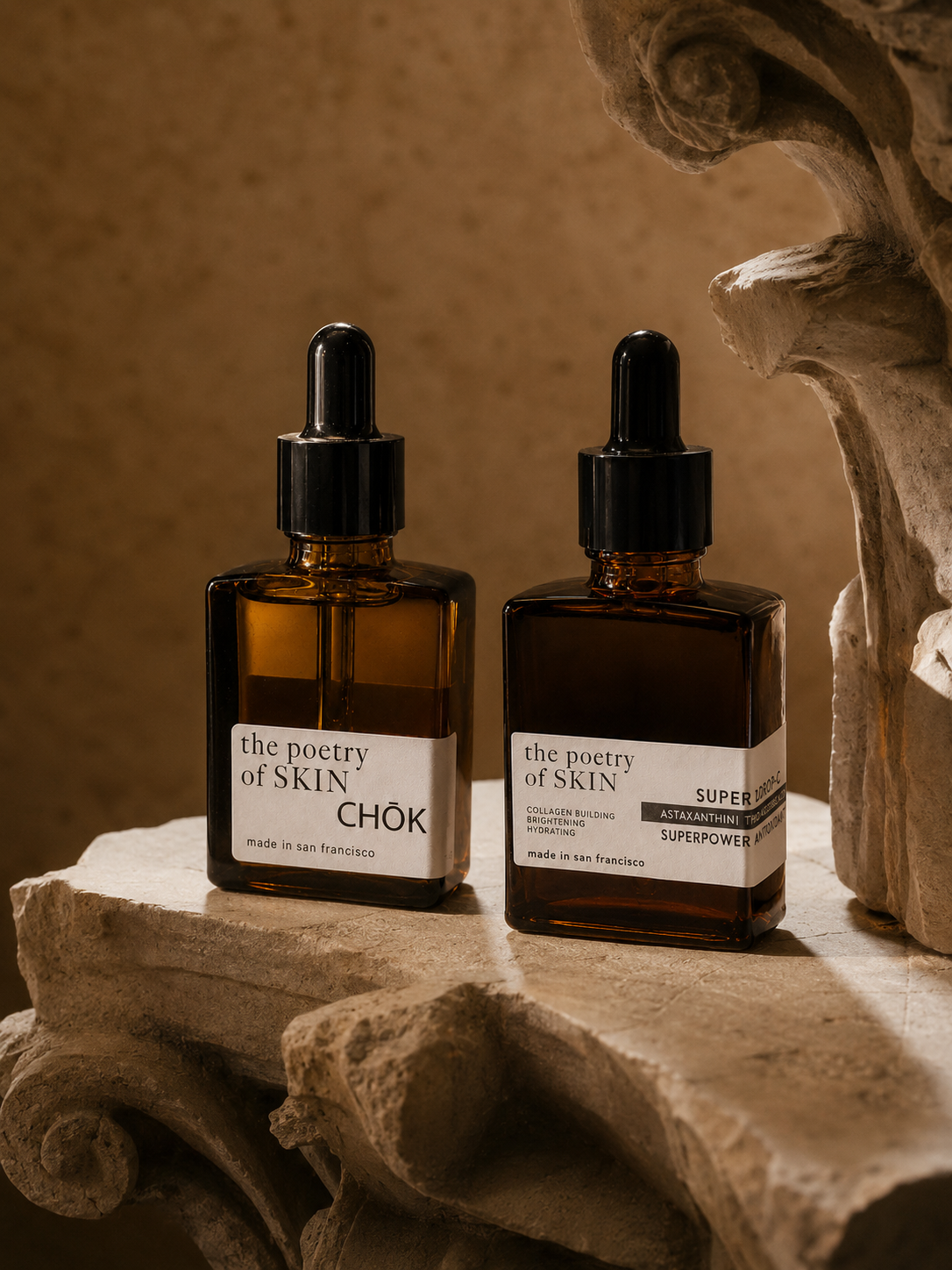
My gentle giant: 60% oil-soluble vitamin C + astaxanthin.
A brightening antioxidant serum I made for people whose skin doesn’t get along with acidic vitamin C.
Who is it for?
I made Super Drop C first for people whose skin feels dry, tight or reactive, especially if other vitamin C serums have stung. It’s also for anyone looking to brighten dullness or uneven-looking tone, or who wants vitamin C in a routine focused on visible firmness. That includes skin that feels different in midlife or around menopause. Patch-test first if your skin is reactive.
What does it do?
It brings together 60% THD ascorbate, an oil-soluble form of vitamin C, and astaxanthin, a carotenoid antioxidant. I designed this antioxidant pairing to help brighten the look of dull, uneven skin and leave it with a soft glow.
How do I use it?
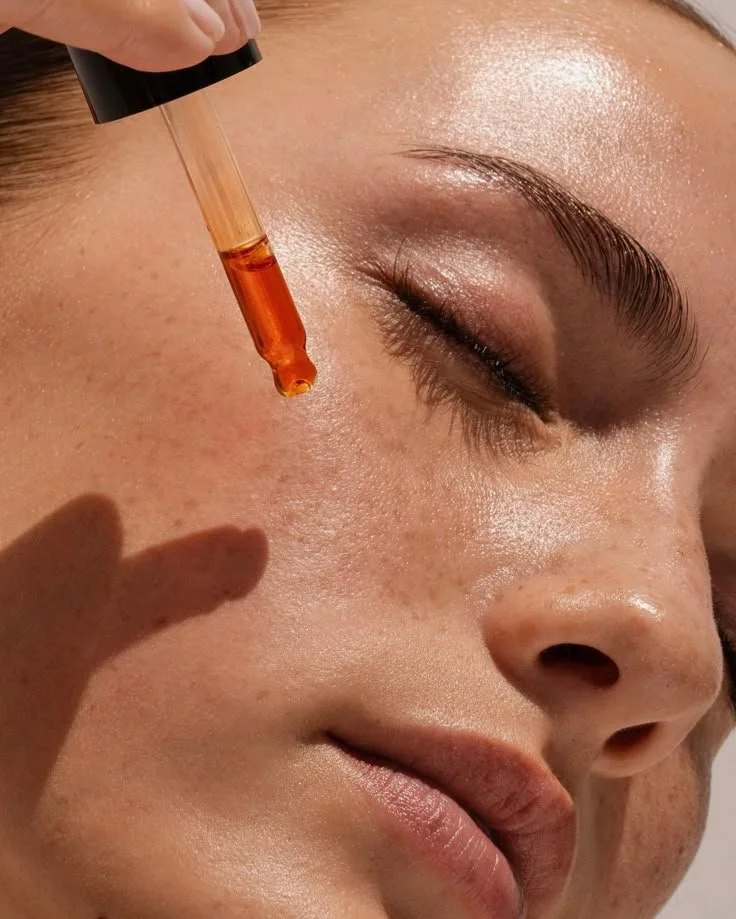
In the morning, press one or two drops onto clean, dry skin on your face and neck. Follow with moisturizer and sunscreen. If you’re new to vitamin C or your skin is reactive, start every other morning and increase as tolerated. Store away from direct sunlight.
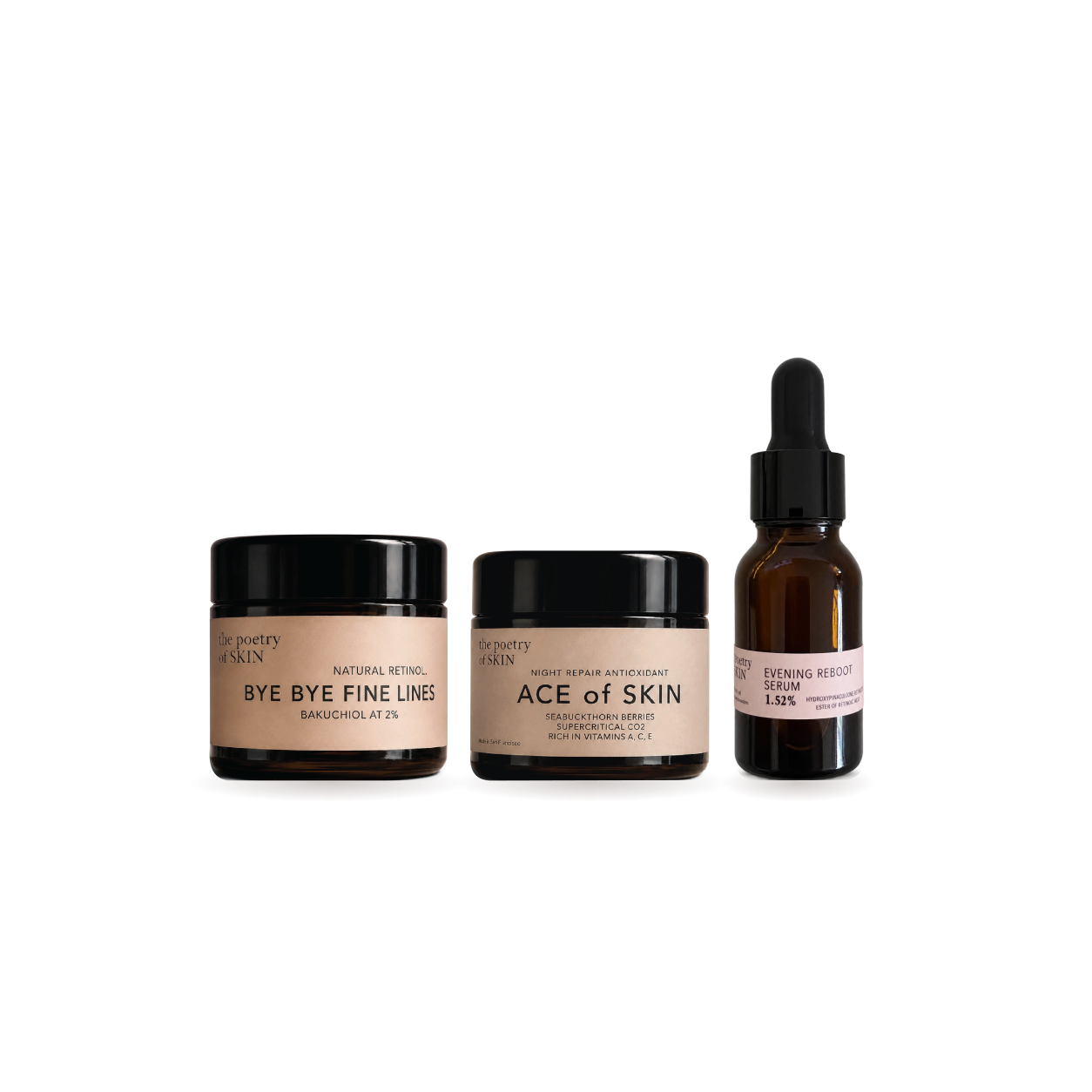
Grace’s tip: You can keep vitamin C and a retinoid in the same overall routine. I’d use Super Drop C in the morning and Evening Reboot at night. If you use a prescription retinoid, follow your prescriber’s directions.
Why I made it this way
I kept hearing the same thing in my treatment room: “I want to use vitamin C, but the one I tried stung.” Pure L-ascorbic acid is water-soluble. Water-based serums with this form are often made at a low pH to help it get into the skin. They can sting, and keeping the vitamin C from oxidizing is another formulation challenge. I wanted a different starting point, so I chose an oil-soluble form called tetrahexyldecyl ascorbate, or THD ascorbate. It makes up 60% of this formula. That’s 60% THD ascorbate, not 60% pure L-ascorbic acid.
I wanted the formula to do more than give skin a glow. One reason vitamin C interests me is its role in collagen production. Fibroblasts, the cells that make collagen, live in the dermis, the layer under the skin’s surface. Vitamin C helps those cells make and mature collagen. That biology informed my choice of vitamin C, but it doesn’t show that this finished serum reaches the dermis or increases collagen.
I paired THD ascorbate with astaxanthin because I wanted a second antioxidant, and I chose jojoba and squalane for a soft finish. That’s what I mean by my gentle giant: a concentrated formula made without relying on a low-pH water base.
Ingredient highlights
Oil-soluble vitamin C (Tetrahexyldecyl Ascorbate), astaxanthin, tocopherol (vitamin E), and squalane.