
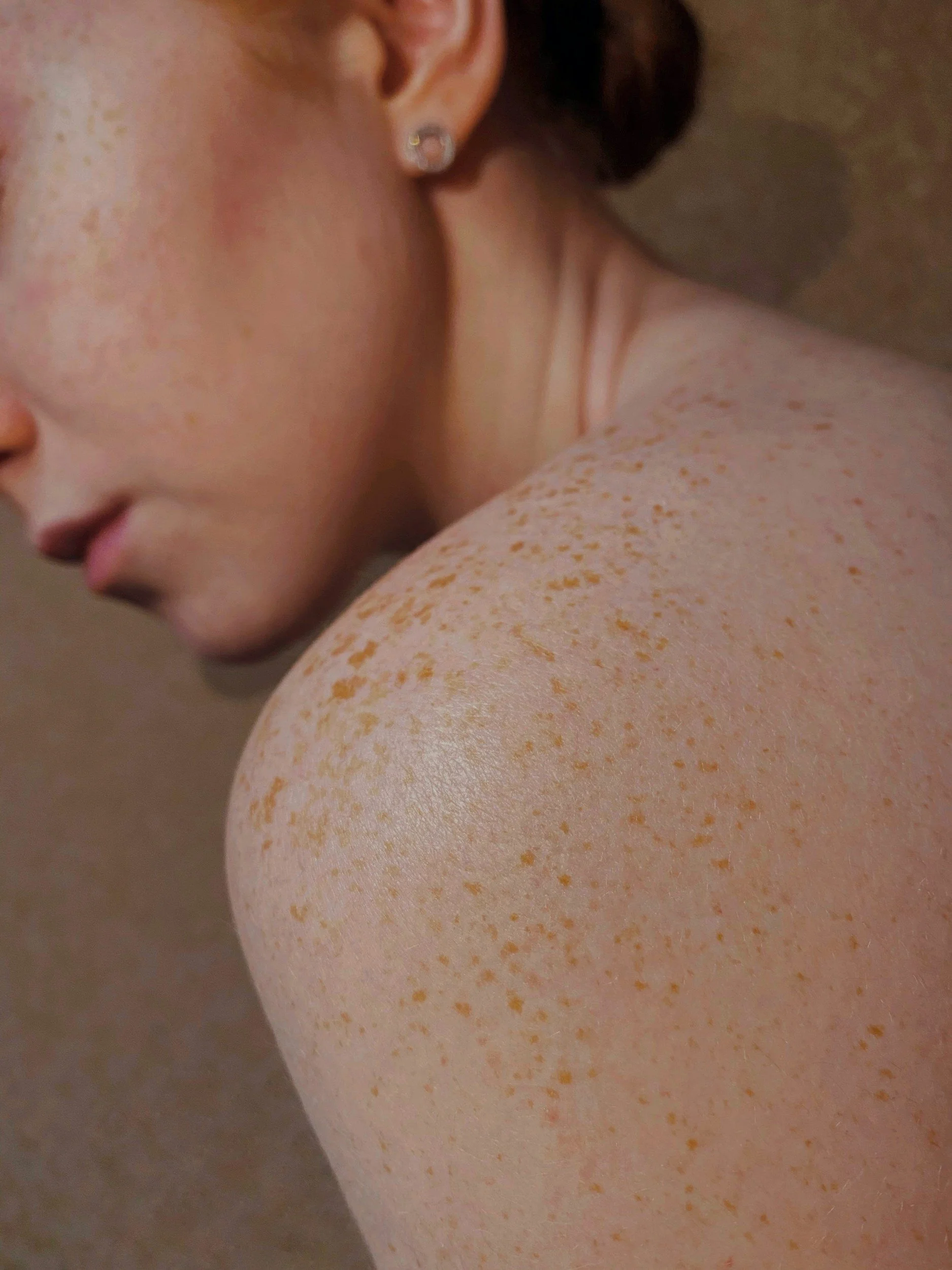
Melasma +
Hyperpigmentation
Brown spots aren't all the same, and that's why so many people feel like they've tried everything. Here you'll find what I actually use and recommend in my studio, plus a way to go deeper with Melasma Decoded, the complete tool kit I've been building for you.
Melasma Decoded
✳︎
Join the Waitlist
✳︎
Early Bird Access
✳︎
Video
✳︎
PDF Toolkit
Melasma Decoded ✳︎ Join the Waitlist ✳︎ Early Bird Access ✳︎ Video ✳︎ PDF Toolkit
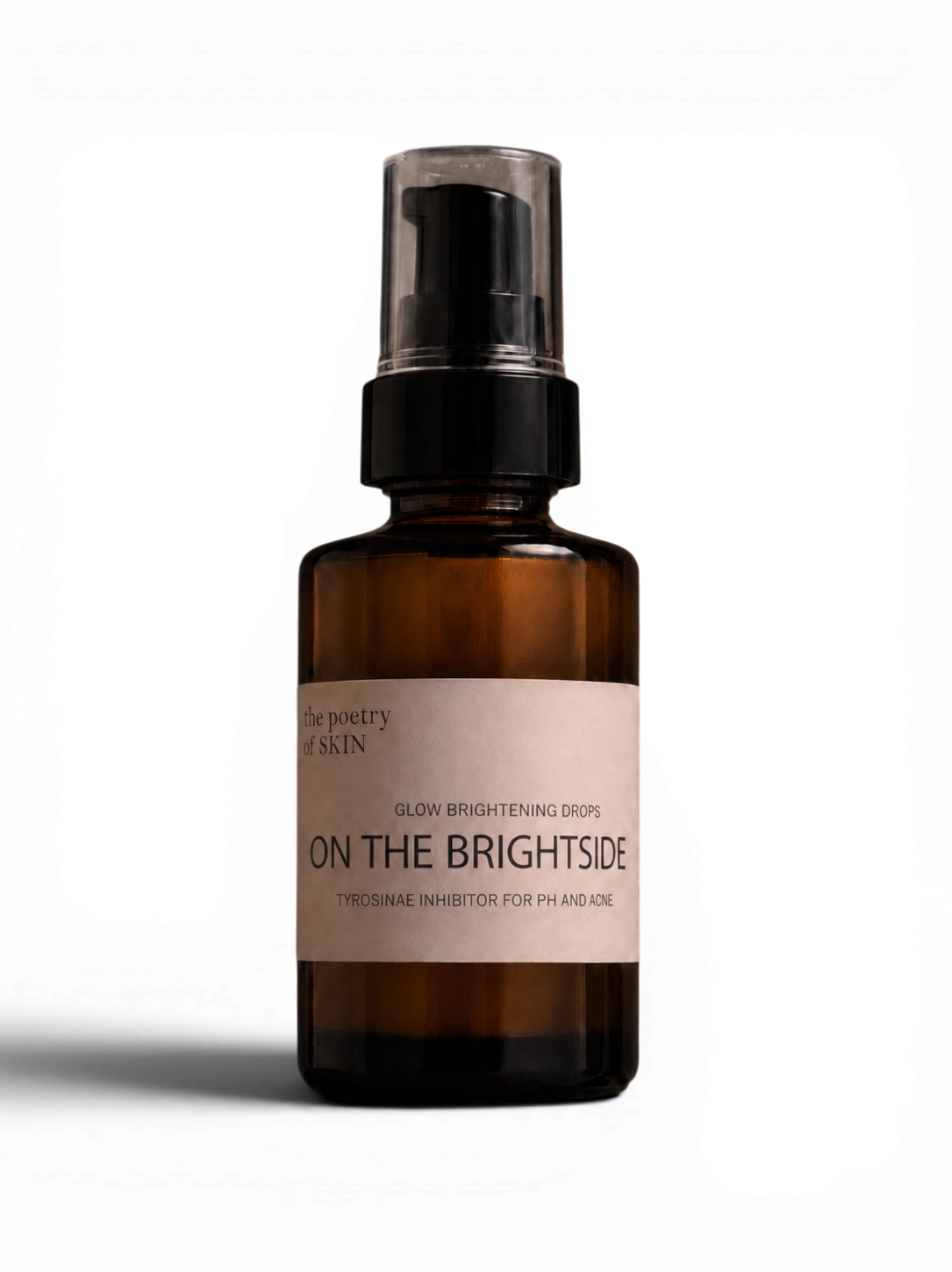
ALL ON THE BRIGHT SIDE
1 oz / 30 ml
Clinical Brightening Serum
This formulation is pregnancy safe. #2 Best-Seller
A targeted evening serum designed to support skin before and after professional treatments such as microneedling, peels, and laser procedures — helping improve the look of uneven tone, post-inflammatory marks, melasma-prone discoloration, and stubborn pigment that does not respond to single-active brightening.
The pigment does not stand a chance.
Most brightening products chase the spot after it appears.
All On The Bright Side is formulated to target the full pigment cascade — from the first inflammatory signal to the visible mark left behind.
Five actives. Six pigment pathways. One intentional formula.
Because hyperpigmentation is not created by one signal. It is built through inflammation, tyrosinase activity, melanin production, pigment transfer, slow cellular turnover, and the stubborn surface retention that makes discoloration linger.
This formula was built to interrupt that process from multiple angles.
Azelaic Acid helps calm visible inflammation while targeting tyrosinase activity before excess pigment formation accelerates.
Tranexamic Acid helps quiet the inflammatory signaling pathways that can deepen melasma-prone discoloration.
Alpha Arbutin supports a more even-looking tone by helping reduce the appearance of excess melanin production at the source.
Niacinamide helps limit the appearance of pigment transfer to the surface while supporting the look of a stronger barrier.
N-Acetyl Glucosamine supports visible tone correction by helping improve the look of lingering dark spots and uneven tone.
This is not hope in a bottle.
This is pathway-based brightening.
The truth about melasma and stubborn pigment: they rarely respond to one ingredient alone. They respond to strategy. They respond to multi-pathway interruption. They respond to consistency, barrier respect, and daily sun protection.
All On The Bright Side was created for skin that needs more than a glow serum — skin that needs targeted support across the pigment pathway.
Use in the evening only.
Because pigment is triggered in daylight, but visible correction is best supported at night — when the skin has the right tools and the right protection plan.
TARGETS
Melasma-prone discoloration
Post-inflammatory hyperpigmentation
Post-acne marks
Sun-induced uneven tone
Photo-damage
Stubborn pigment that resists single-active brightening
Dull, uneven, reactive, or treatment-prepped skin
WHY IT WORKS
Pathway 1 — Inflammatory Trigger
Tranexamic Acid and Azelaic Acid help calm the visible inflammatory signals that can worsen discoloration.
Pathway 2 — Melanocyte Signaling
Tranexamic Acid helps reduce the look of pigment triggered by repeated inflammatory and hormonal-looking discoloration pathways.
Pathway 3 — Tyrosinase Activity
Azelaic Acid and Alpha Arbutin help target tyrosinase, the enzyme involved in excess melanin production.
Pathway 4 — Melanin Production
Alpha Arbutin supports a more even-looking tone by helping reduce the appearance of excess pigment formation.
Pathway 5 — Pigment Transfer
Niacinamide helps reduce the appearance of melanin transfer to surface skin cells.
Pathway 6 — Surface Retention + Stubborn Marks
N-Acetyl Glucosamine supports visible correction by helping improve the look of lingering dark spots and uneven tone.
Suspended in a barrier-supporting humectant system with hyaluronic acid to keep the formula effective without pushing compromised skin over the edge.
THE NON-NEGOTIABLES
You can use this evening or morning.
Apply SPF 50 every morning. Mineral preferred.
Do not use on freshly compromised skin unless directed as part of your treatment plan.
Results require consistency. Melanocytes do not reset overnight, but they can be retrained over time.
Apply 1–2 drops to cleansed skin in the evening. Press into the skin. Do not over-rub. Let it absorb before layering moisturizer.
Poetry of Skin
Evidence meets intention.
INCI: Aqua (Water), Propylene Glycol, Glycerin, Azelaic Acid, Tranexamic Acid, N-Acetyl Glucosamine, Nicinamide, Alpha Arbutin, Sodium Hyaluronate, Propylene Glycol (and) Diazolidinyl Urea (and) Iodopropynyl Butylcarbamate, Xanthan Gum
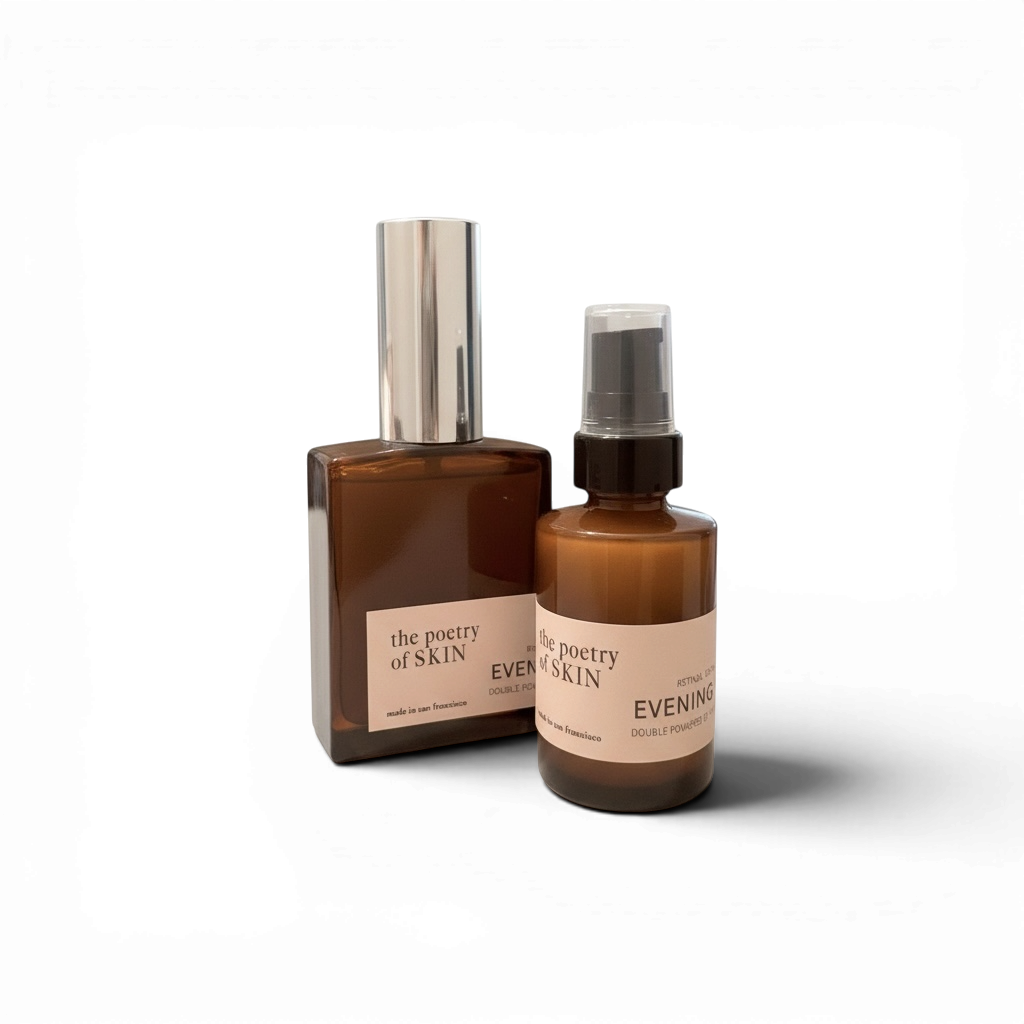
EVENING Reboot Serum 1.52%
A retinoid night oil that works the way your skin does, no conversion steps, this is straight up retinoic acid.
1.52% HPR · Anhydrous · Small Batch · San Francisco
Renewal without the harsh awakening, great for melasma and barrier compromised skin conditions.
Most retinol products ask your skin to do the work — converting retinol through multiple enzymatic steps before a single receptor is activated. Evening Reset No. 1 takes a different path entirely. Formulated with 1.52% Hydroxypinacolone Retinoate (HPR), a retinoic acid ester that binds directly to retinoid receptors without any conversion, it delivers clinical-level renewal from the first drop. No waiting. No irritation cascade. No dryness.
Suspended in a water-free oil matrix with bakuchiol, squalane, and four nourishing botanicals, this is the retinoid your skin has been waiting for.
The Science
Direct retinoid activity. Genuine gentleness.
Tretinoin is retinoic acid itself — direct, powerful, and often too aggressive for daily use. Traditional retinol works more gently only because it must convert through two enzymatic steps before reaching those same receptors, and much is lost along the way. HPR is different: it is a retinoic acid ester that binds directly, skipping the conversion entirely, but with a gentler receptor affinity. The result is true retinoid activity — collagen stimulation, accelerated cell turnover, refined texture — delivered without the inflammation, peeling, or dryness associated with either retinol or tretinoin.
At 0.5% in an anhydrous environment, HPR remains fully stable and potent from the day you open it to the last drop.
What's Inside
1.52% HPR (Hydroxypinacolone Retinoate)
A direct retinoic acid ester that activates retinoid receptors without conversion. Clinical renewal, genuine tolerance.
Squalane
Biomimetic hydration that penetrates deeply while sealing in overnight moisture. Your skin recognizes both as its own.
Jojoba Oil
Technically a liquid wax, not an oil — it mirrors your skin's natural sebum to balance without congesting.
Vitamin E
Antioxidant protection for your skin and the formula itself — preserving HPR's potency through every use.
Who It's For
Dry & Mature Skin
Traditional retinoids strip what dry skin can least afford to lose. This formula floods skin with moisture while the HPR works — no tightness, no flaking.
Sensitive Skin
HPR's gentler receptor affinity plus bakuchiol's calming properties make this suitable for reactive skin types who've struggled with every other retinoid.
Retinoid Beginners
Start with real retinoid activity — not a compromise. The nourishing oil base minimizes any adjustment period while delivering visible results from early on.
Experienced Users
Even those well-acquainted with retinoids will find something new here: results without any of the harshness, in a texture that feels like a ritual rather than a regimen.
The Experience
This is not the clinical, slightly-anxious experience of applying a traditional retinoid. Evening Reset No. 1 glides on like silk, absorbs without residue, and works while you sleep — so you wake to visibly smoother, more luminous skin that feels exactly as good as it looks. Handcrafted in small batches in San Francisco.
INCI: C12-15 Alkyl Benzoate, Isoamyl Laurate, Squalane, Coco-Caprylate/Caprate, Simmondsia Chinensis (Jojoba) Seed Oil, Bakuchiol, Hydroxypinacolone Retinoate, Bisabolol, Tocopherol.
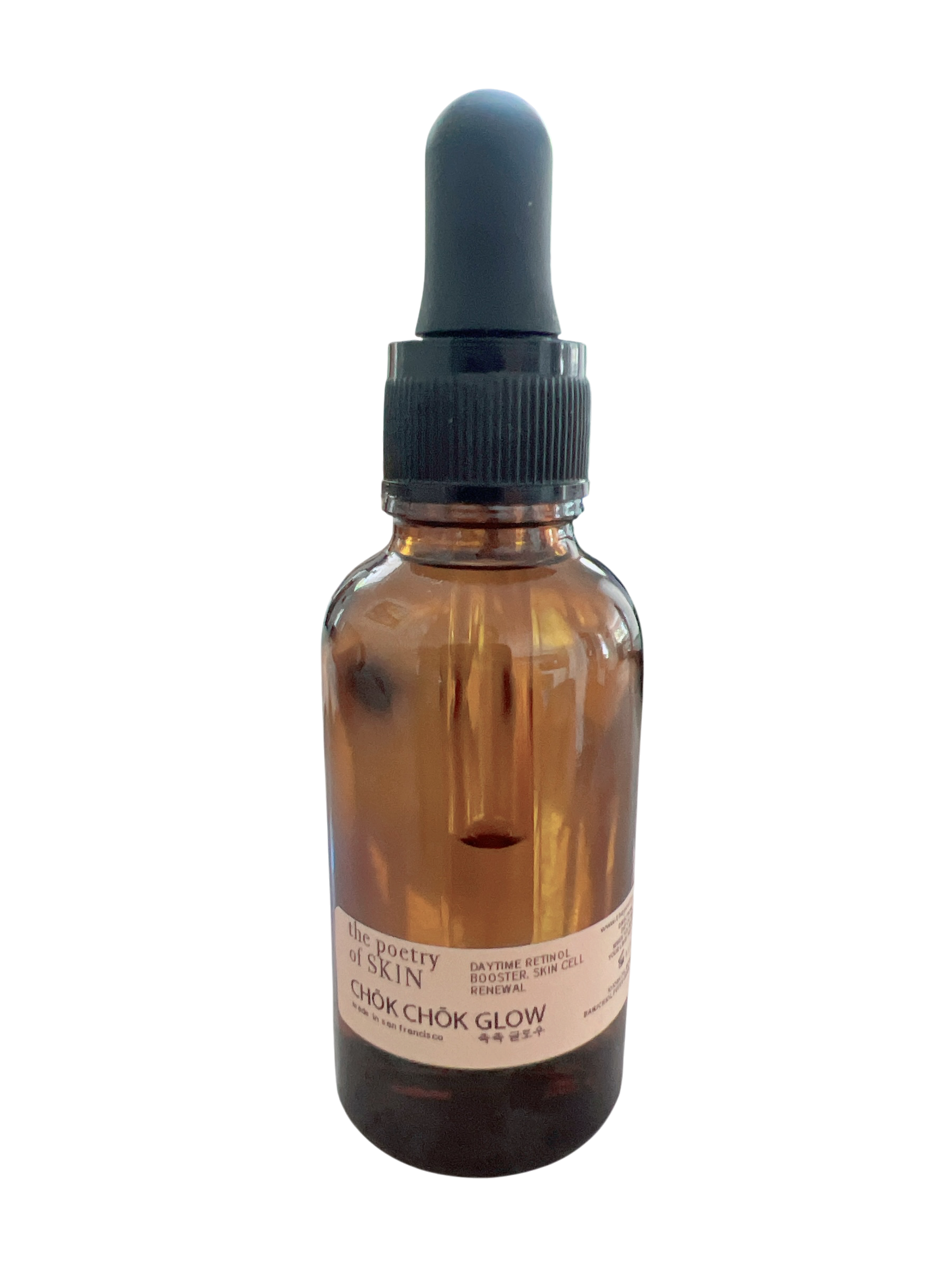
Chok Chok Natural Retinol
Chok Chok The Gentle Giant — Cell Renewal Serum
#3 Best-Seller
Why retinol failed you — and why that was never your fault
I have sat across from more clients than I can count who said the same thing.
"I tried retinol. I can't use it."
The flaking. The burning. The purging that lasted weeks. The hyperpigmentation that appeared because their skin became photosensitive and they stepped outside on a Tuesday. And then the fear that followed — of ever trying an active again.
I understood every word. And I refused to accept that transformation had to feel like damage.
Retinol has been the gold standard of cellular renewal for decades — and the science behind it is irrefutable. It accelerates cell turnover. It stimulates collagen synthesis. It fades hyperpigmentation, softens fine lines, and rebuilds what time and sun have taken.
But for dry, sensitive, and reactive skin, conventional retinol has always been a punishment disguised as a promise. The ingredient works. The delivery destroys.
So I looked elsewhere.
What Chok Chok does
Chok Chok delivers genuine cellular renewal — accelerated cell turnover, collagen stimulation, fading of hyperpigmentation, softening of fine lines — without the inflammatory response that makes conventional retinol intolerable for so many.
With consistent use, skin becomes visibly firmer. Tone evens and clarifies. Fine lines soften. Texture refines. And the skin barrier, rather than being compromised in the process, is actively restored at the same time.
No photosensitivity. No purging. No peeling. Safe morning or evening. Safe for rosacea, eczema, acne, and chronically reactive skin.
Chok Chok is the Korean word for skin so hydrated, so plump, so alive it bounces back. That is the standard this formula is held to.
The Korean priori science behind the formula
Bakuchiol — derived from the seeds of the Psoralea corylifolia plant, used for centuries in Ayurvedic and traditional Chinese medicine — is not a trend ingredient. It is one of the most rigorously studied alternatives to retinol in published skin science.
In a landmark randomized, double-blind clinical trial published in the British Journal of Dermatology, researchers compared bakuchiol against retinol over 12 weeks. Both groups showed statistically significant improvement in fine lines, wrinkles, elasticity, pigmentation, and overall photoaging. No statistically significant difference between the two groups in efficacy. But a profound difference in tolerability — retinol users reported significantly more scaling, burning, and stinging at every follow-up point. Bakuchiol users reported essentially none.
Same result. Without the suffering.
Bakuchiol works by mimicking retinol's gene expression — upregulating the same biological pathways that drive collagen production and cellular turnover — without triggering the inflammatory cascade that causes retinol's side effects. It is not a diluted version of retinol. It is a different route to the same destination, through a door the skin actually wants to open.
This is the Korean priori approach: following the science past the gold standard when the science demands it.
Gentle but giant: 0.5% bakuchiol in a base that rebuilds while it renews
At 0.5% bakuchiol, this is not a cosmetic dose. It is the concentration where the clinical evidence lives — selected deliberately because that is where genuine cellular renewal begins.
And because dry skin is never just a surface problem — it is a signal of something happening beneath — Chok Chok is suspended in a deeply nourishing jojoba base.
Jojoba is structurally the closest thing in nature to the skin's own sebum. It does not sit on top of the barrier. It integrates with it — communicating in the skin's own lipid language, feeding and reinforcing the barrier while bakuchiol rebuilds from within.
Most cell renewal formulas compromise the barrier in the process of working. Chok Chok does the opposite. Collagen production supported. Cell turnover activated. Hydration restored. Barrier never compromised.
For the woman with rosacea who was told she could never use an active. For the client with eczema who has been afraid to try again. For the skin that has been patient long enough.
She can. She just needed the right formula.
How to use Chok Chok
Apply 3 to 4 drops to clean skin morning and evening before moisturizer. Press gently into face and neck — do not rub.
Unlike retinol, bakuchiol requires no adjustment period and carries no photosensitivity risk — it can be used safely morning and evening from the first application. If your skin is very reactive, begin with evenings only for the first two weeks before introducing a morning use.
Layer under a barrier-supporting moisturizer. In the morning, always follow with broad-spectrum SPF 30 or higher. Avoid layering with direct acids in the same routine step.
Bakuchiol is safe for use during pregnancy and breastfeeding — unlike retinol, it carries no contraindications. Consult your physician if you have any concerns.
— Grace, Botanical Atelier
INCI: Meadowfoam Seed Oil, Squalane, Isoamyl Laurate, Bakuchiol, Tocopherol.
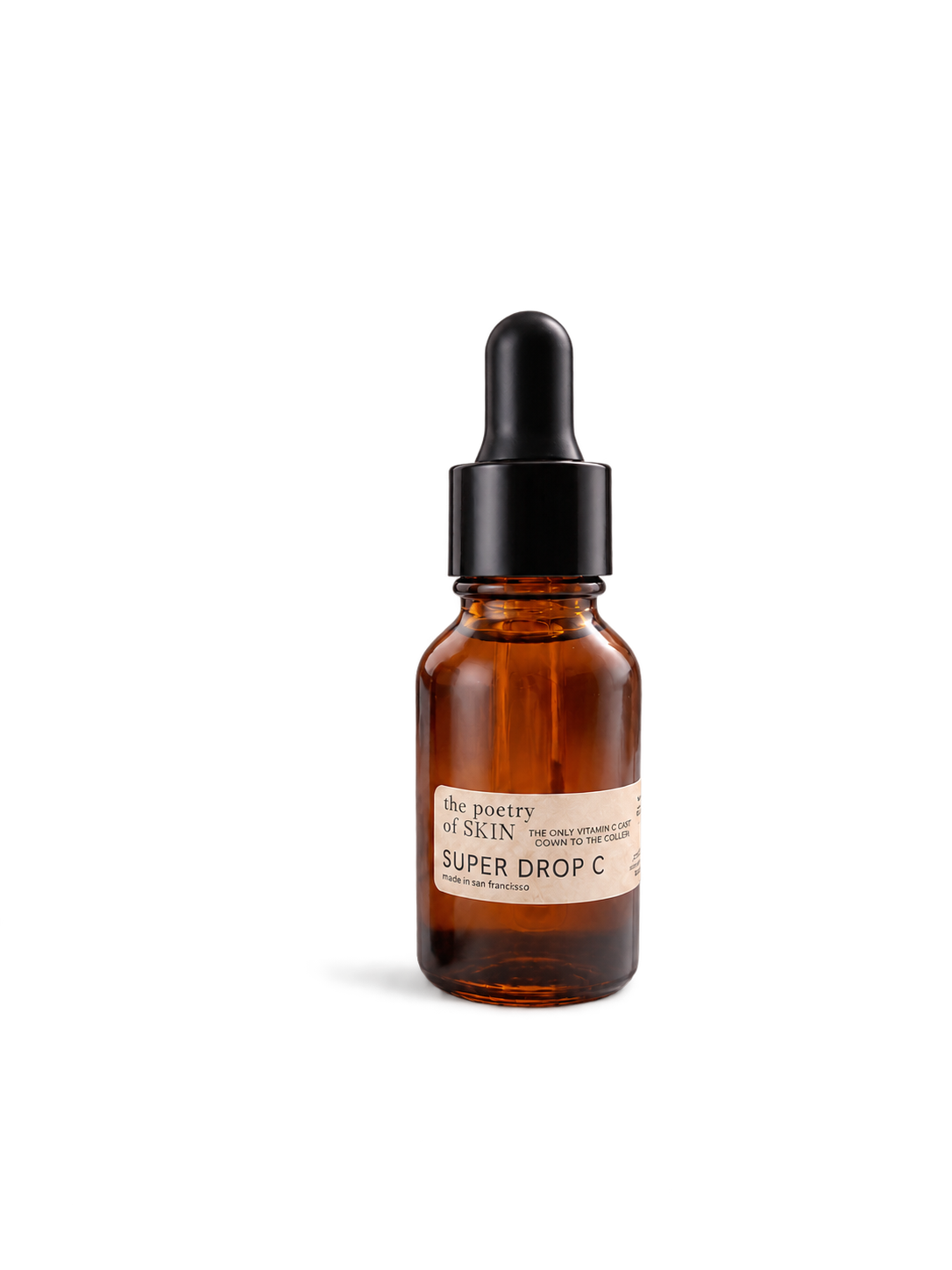
Super Drop C
Vitamin C — why most formulas fail it
#1 Best-Seller
I have sat across from more clients than I can count who said the same thing to me.
"I tried vitamin C. It burned. It broke me out. The bottle turned yellow/brown in three weeks. I gave up."
And every time, I thought the same thing: we are selling this ingredient completely wrong — especially for skin that's changed with age.
Every brand will tell you vitamin C is an antioxidant. And it is — but most formulas stop there, and stopping there is exactly why so many vitamin C products on the market never get a fair chance to work on skin after 40.
Vitamin C has long been studied for its role in skin's resilience and visible firmness over time. But most of that potential is wasted before it ever gets a chance to matter — because most vitamin C is water-soluble, and skin's barrier is lipid-based. The two were never going to get along.
We reduced vitamin C to a brightener. We put it in water-based formulas that oxidize within weeks, sit on top of the skin instead of working with it, and sting and inflame the very people who could benefit most — women with rosacea, eczema, and chronically reactive skin who were told they simply couldn't use actives.
I formulated Super Drop C because I was done with that story. What Super Drop C does for reactive, midlife skin
Super Drop C is formulated to move past the surface and work with skin's own structure — without the inflammation, oxidation, or irritation that's defined most people's experience of vitamin C.
With consistent use, skin looks visibly firmer, tone appears more even, and post-inflammatory marks fade over time. It's not about resurfacing anything. It's about giving skin what it needs to look like it's working with you, not against it.
It absorbs without residue. It doesn't sting. The formula is built to resist oxidation in the bottle far longer than standard vitamin C — and it's formulated to work on skin that other vitamin C formulas have already failed.
The Korean priori science behind a vitamin C built for sensitive skin THD Ascorbate — tetrahexyldecyl ascorbate — is the reason this formula does what water-soluble vitamin C struggles to.
Skin's barrier is lipid-based. Standard L-ascorbic acid is water-soluble. It tends to sit at the surface, oxidize quickly, and cause the stinging and breakouts that made you give up on vitamin C in the first place.
THD Ascorbate is oil-soluble. Developed through Korean ingredient science and its exacting approach to formulation, it's designed to move with skin's own lipid structure rather than fight it — converting to active ascorbic acid once it reaches its target. Minimal oxidation in transit. Minimal irritation at the surface.
This is the Korean priori approach: not chasing trends, not reformulating a compromised ingredient to fit a water-based texture. Choosing the form of the ingredient that skin's own biology is more likely to accept.
60% THD Ascorbate and Astaxanthin — built for skin that stopped tolerating actives
At 60% concentration, THD Ascorbate is not a supporting ingredient in this formula. It is the formula.
Most vitamin C products on the market — even those positioned as high-performance — use concentrations well below what we believe is needed to make a visible difference. We didn't dilute it. We didn't dress a trace amount in marketing language. The concentration is the point.
And then there is Astaxanthin.
Most brands pair vitamin C with other antioxidants to amplify its antioxidant effect. We did the opposite — and it changes what this formula is capable of.
Astaxanthin is a marine carotenoid derived from microalgae, studied as one of the most potent antioxidants found in nature. It's what gives wild salmon their cellular endurance. In skin, it's formulated here to take on the antioxidant workload at the surface.
When Astaxanthin carries that load, THD Ascorbate is freed up to focus on what it does best: working with skin's own structure, over time, without a fight.
That's the division of labor that makes this formula different. Not two antioxidants stacked on top of each other. One doing what it does best — so vitamin C can finally do what it was always meant to do.
For my clients with rosacea, eczema, acne, and chronically reactive skin — this is the formula I reach for first. Not because it's gentle in spite of being effective. But because it's gentle because it understands skin deeply enough not to fight it.
Visible results, without the trade-off. That's the standard this formula was built to meet.
How to use Super Drop C
Apply 1 to 2 drops to clean, dry skin each morning before moisturizer and SPF. Press gently into face and neck — do not rub.
If you are new to vitamin C or have reactive skin, begin on alternating days and increase to daily use as your skin adjusts.
You can layer direct acids or retinol in the same routine step.
Store away from direct sunlight. THD Ascorbate is formulated for greater stability than water-soluble vitamin C — but cool, dark storage extends the life of every active in the bottle.
INCI:Tetrahexyldecyl Ascorbate, Simmondsia Chinensis (Jojoba) Seed Oil, C12-15 Alkyl Benzoate, Isoamyl Laurate, Caprylic/Capric Triglyceride, Squalane, Tocopherol, Astaxanthin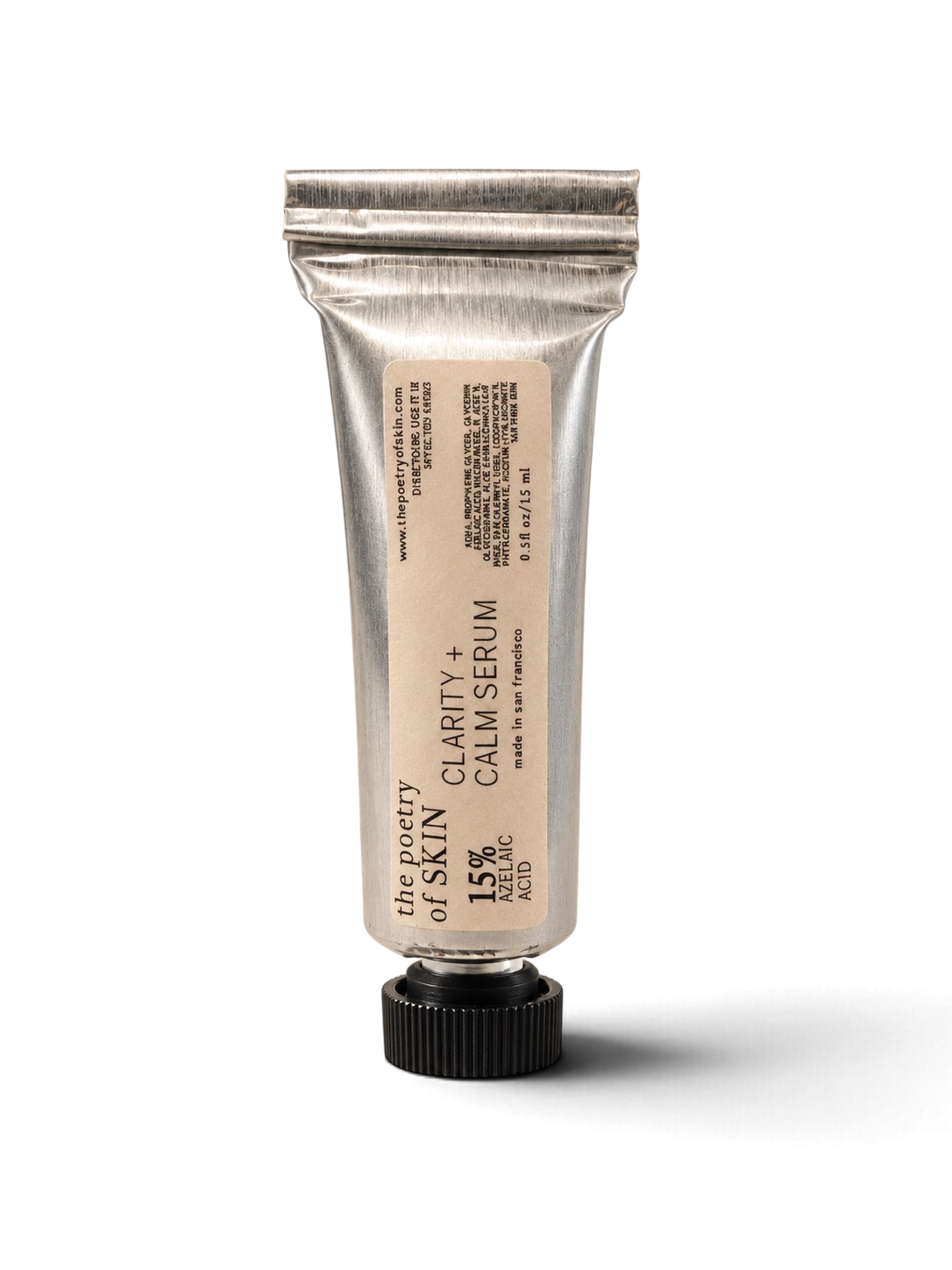
Azelaic Acid Solution — 10% & 15%
Even tone. Eased redness. Zero drama.
The Short Story
Clarity + Calm is our glycerin-based azelaic acid solution — formulated to fade the look of discoloration and calm reactive, uneven skin without the sting, tightness, or purge so many azelaic products come with.
Where most azelaic formulas fight you on the way in, this one doesn't. A glycerin-forward, pH-balanced base means the active gets to work while your barrier stays intact — so skin feels soothed, not stressed, even during the adjustment period.
Two strengths, one philosophy: meet your skin where it is.
Why It's Different
Non-Irritating by Design Built on a glycerin base rather than a stripped, purely aqueous hydrating delivery system — glycerin draws and holds moisture at the skin barrier, offsetting the dryness and tightness azelaic acid can otherwise cause.
pH-Balanced Formulated within skin's natural pH range so the active is both effective and gentle — no unnecessary acidity to compound irritation.
Soothing, Not Stripping Calming by formulation, not just by marketing — the base itself is doing work to keep skin comfortable from first use.
What It's For
Uneven tone and visible discoloration
Post-breakout marks and lingering redness
Reactive, easily-irritated skin that hasn't tolerated azelaic acid before
Anyone who wants consistent, cumulative results without the "purge and pray" phase
Choosing Your Strength
10% — Clarity + Calm Original The everyday entry point. Ideal if you're new to azelaic acid, have sensitive or reactive skin, or want a maintenance strength you can use long-term without a break-in period.
15% — Clarity + Calm Intensive A higher-performance option for skin that's already comfortable with azelaic acid and ready for more visible results, more quickly. Same soothing base, more active.
Not sure which one is right for you? Start at 10% and build tolerance — you can always step up.
How to Use
Apply to clean, dry skin — morning or evening.
A thin, even layer is all you need. A little goes a long way.
Follow with your moisturizer and, in the AM, SPF.
New to azelaic acid? Start every-other-day and build up as tolerated.
Good to Know
Fragrance-free
Formulated without harsh solvents or drying alcohols
Suitable for use alongside most other actives — introduce slowly if layering with retinoids or additional exfoliants
Patch test recommended before full-face use, especially at 15%
As with any active ingredient, individual results and tolerance vary. If you're pregnant, nursing, or under a dermatologist's care for a diagnosed skin condition, check with your provider before starting.
INGREDIENTS: propylene glycol, glycerin, azelaic acid
Launch Date: TBA — likely November
You're doing everything right. Sunscreen, every single day. The right actives. You've followed every rule you've been told to follow — and it still comes back. If that's you, you're not doing something wrong. You just haven't been given the full picture yet.
There's so much information out there about melasma, but it's fragmented. Everyone talks about hormones. Everyone talks about sun exposure. Everyone talks about heat. But what does any of that actually mean? How does it all break down? Those are just triggers — surface-level symptoms of something deeper. Where are the actual causes? This is the guide I wish had existed when I started treating my own melasma — one that finally connects the dots.
Launch is a little delayed because we're adding more — including video — to make this the most complete resource possible. What you'll get is a full video + PDF tool kit.
Join the waitlist now for the early-bird price — it goes up soon.
What's Inside
Understanding Your Melasma
The different types of melasma, by pattern and by depth — and why identifying yours matters, because each type needs a different treatment and care plan
How to actually identify what you're dealing with
Postpartum melasma vs. regular melasma — why they're not the same story
Causes & Triggers
The real causes behind melasma — the part most guides skip entirely, and the piece you need to understand before triggers even make sense
Once you understand the cause, the triggers finally make sense — heat, hormones, and the everyday things that set it off
How long melasma actually lasts, and what long-term management really looks like
Treatment Breakdown
The best treatment methods for your specific type of melasma — not a one-size-fits-all list
In-office: which lasers and treatments actually help your specific melasma — and which can make it worse
The ingredients that work together, how to combine them properly, and how to figure out what your specific melasma actually needs
The cutting-edge ingredients and technology emerging right now — including newer options clinically positioned to rival hydroquinone, the current gold standard
How to find the right products in your local area — including but not limited to Poetry of Skin — plus exactly which ingredients to look for so you can shop smart within your own budget
In-Office Procedures
Every type of in-office treatment, broken down one by one
Pre-procedure prep — everything that actually goes into preparing your skin beforehand (it's more involved than most people think — not just one step, but a full sequence)
Post-procedure care — the complete aftercare process to protect skin and prevent pigment rebound (again, more than a single step)
What to ask your provider before any procedure
Hydroquinone, Explained
What it actually does to pigment, which strength and form work best, how long to use it, and why breaks matter
Be Your Own Health Advocate
A complete doctor handoff page — exact questions to ask, tests to request, and what a real, thorough answer should sound like
The difference between a doctor who understands melasma's hormonal complexity and one who's just handing you a generic cream
The signs you're being brushed off, and exactly what to say next
Lesser-known, more holistic testing options worth asking about — beyond standard bloodwork
Walk into your appointment prepared, and walk out having actually been heard
Bonus: Korean Treatment Access
Insider insight into Korean dermatology and melasma care — the clinics, treatments, and terminology to know if you're exploring treatment in Korea
About Me
I'm Grace, a Licensed Master Esthetician and cosmetic formulator currently pursuing a Master of Science in Integrative Health, focusing on nutrition — because melasma isn't just a skin issue, it's a whole-body one. This guide is everything I've learned, distilled into one place.
Join the Waitlist
Join the waitlist now for the early-bird price before it goes up.
All sales are final — no refunds.
Disclaimer: This guide is for educational purposes only and does not constitute medical advice. Please consult a licensed healthcare provider for diagnosis and treatment of any skin condition.

Sign up now to be on the waitlist for the early bird discount
Guide/Workshopk
M Project
Bay Area? Come see me for our Melasma Restore Treatment
Get In Touch
If you're interested in working with us, complete the form with a few details about your project. We'll review your message and get back to you within 48 hours.